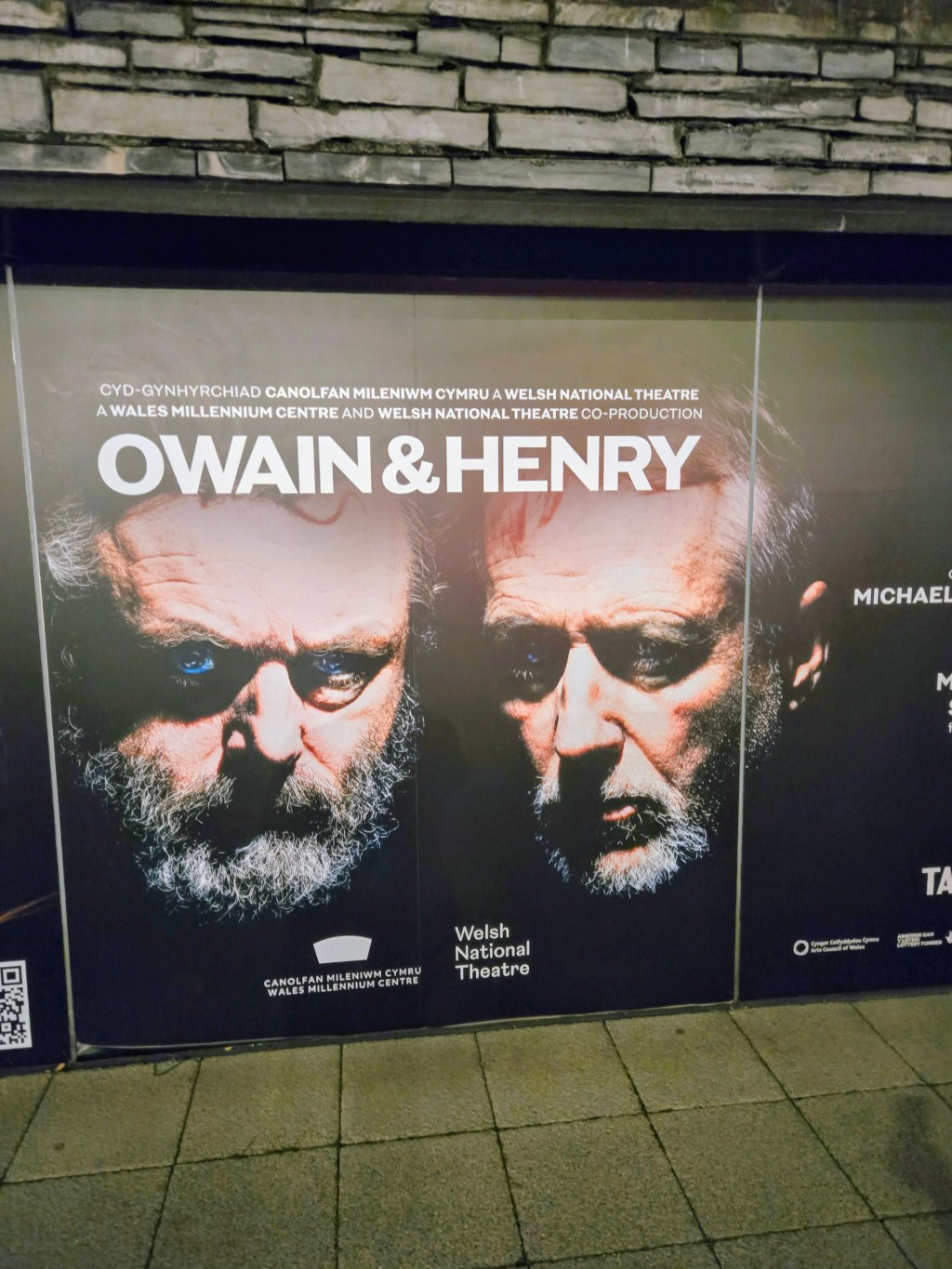
Arriving at the Wales Millennium Centre to watch the hotly anticipated Owain and Henry, I spotted former First Minister Eluned Morgan in the lobby. A few hours later, I was struck by how her attendance served as a fitting metaphor for the production itself.
Baroness Morgan ended up sitting just a few rows in front of me – in the cheap seats. Earlier this year, she was, in terms of devolved powers at least, the most powerful politician in Wales. Yet, despite a crowd presumably more interested in Welsh public affairs than most, I would wager many people there wouldn’t have recognised her.
Compare that with, say, Liz Truss. Both headed up governments; both ended up losing their seats. Yet Truss – who was Prime Minister for just 49 chaotic days – gets lifelong security protection and a taxpayer-funded office to handle ongoing public duties. The thought of Truss nestled in the cheap seats of a theatre, going largely unnoticed, is for the birds. The closest I saw to any privilege for Morgan was skipping the long queue for the stairs, though even that didn’t appear driven by any sense of entitlement, rather some lucky movements…!
You could say this exact power dynamic played out on stage shortly afterwards. The juxtaposition – of how leaders in Wales and its neighbours regard themselves, and are regarded – is stark. Many devolved politicians like to say we do things differently in Wales. At times, that view has been espoused by senior figures forgetting that the Cardiff Bay bubble doesn’t speak for the whole nation. It is a mistake they have made again and again. Yet still, the sentiment certainly carries wider truths, and is a message pushed hard throughout this nearly three-hour production.
Epic production and cast
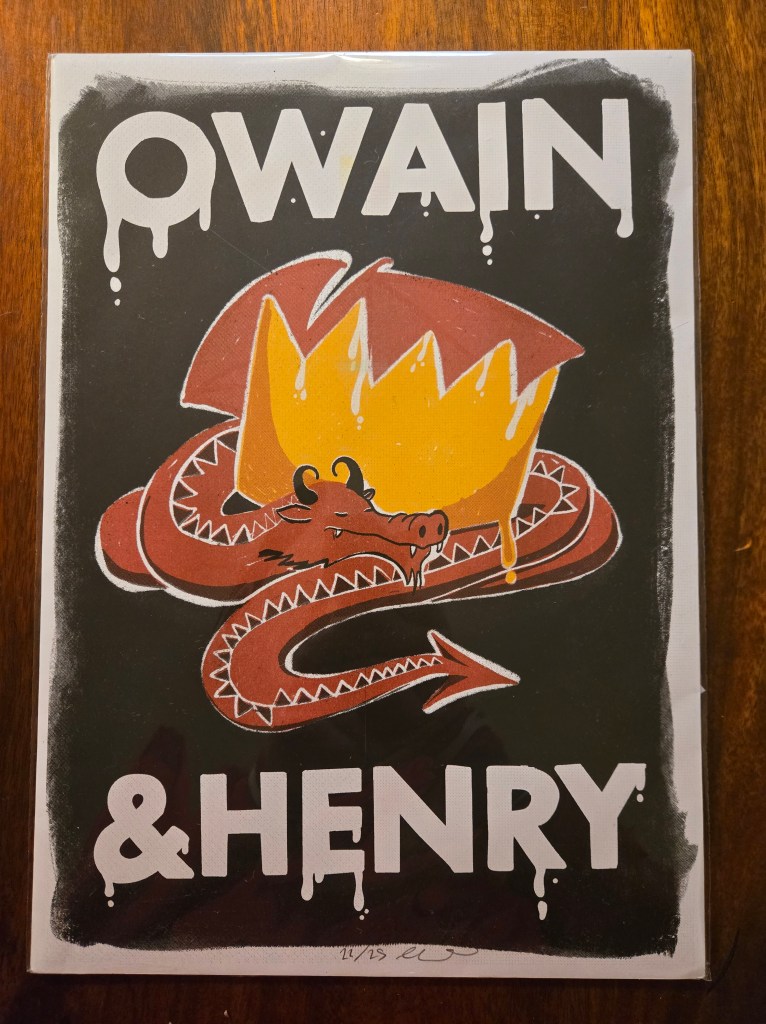
Owain and Henry is very good. The staging is excellent, utilising a video screen at the back of the boards to pull the audience into the darkness of the 15th century. Combined with simple, effective props – thrones, wooden ladders and more – it easily shifts between the streets of Powys, Glyndŵr’s own estate, and the battlefield. Despite the persistently dim lighting, the scale feels massive, a big theatrical event in a nation perhaps used to smaller stuff. Most evenings are practically sold out. Outside of its safer confines of Cardiff Bay, and certainly the other side of Offa’s Dyke, it may struggle to have the same impact – but the whole thing felt like a big deal. Queues. Merchandise. Anticipation.
The cast, too, is stellar. Star man Michael Sheen, as Glyndŵr, earns his stripes with plenty of stage time, clearly revelling in playing the man many Welsh nationalists describe as the last true Prince of Wales. He is arguably stretched thin as star, director, and chief cheerleader for the production, yet the audience still gets the full force of his aura.
Sheen is well supported by Rakie Ayola as Owain’s wife, Mared, who injects both humour and principle into the role, cast here as humanitarian adviser and counsel to her husband. Further down the cast list, James Wilbraham deserves a special mention for bringing Mortimer to life, securing plenty of laughs as he playfully learns Welsh and falls for Owain’s daughter, Catrin (played by Emily Burnett). Meanwhile, understudy Nigel Basset and Ned Costello clearly delineate the differing leadership styles of Henry IV and Henry V – Basset’s pragmatic rule brutishly offset by his son’s bloodthirsty ambitions, even if Henry V descends into more of a pantomime villain as the plot progresses. (Apparently, stand-in Basset carried his script throughout the performance; that I didn’t even notice testifies to a seamless substitution.)
Sledgehammer to crack a sympathetic nut?
And that brings us to the storyline – which is where, despite many positives, I start to have some problems.
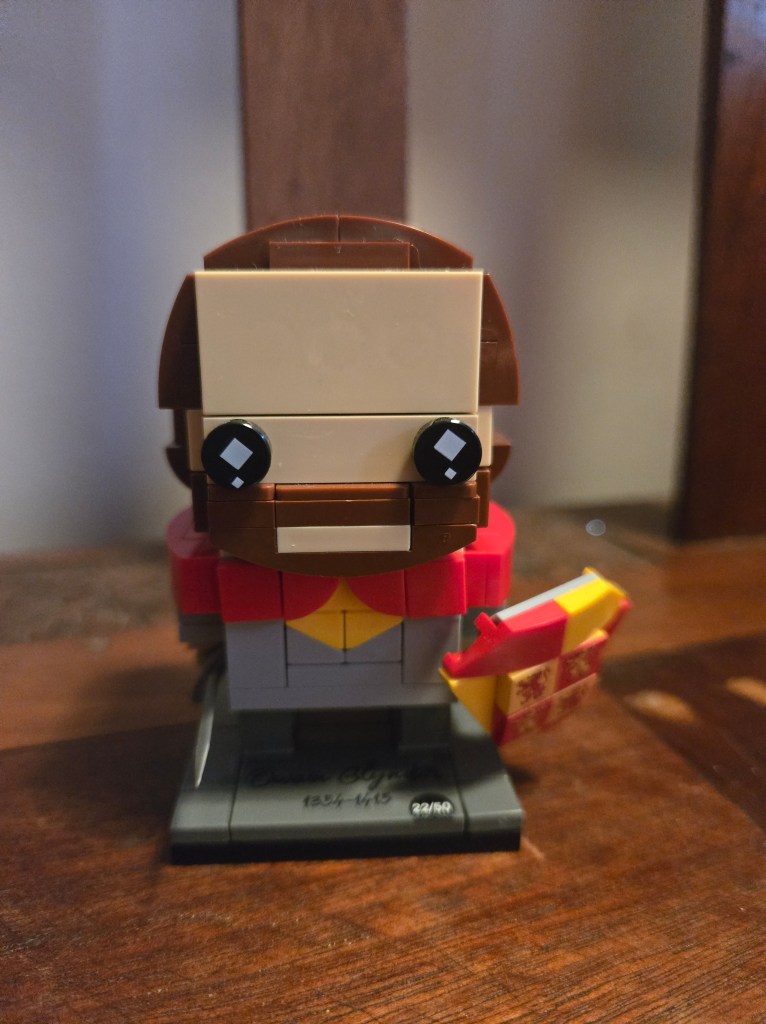
I love my history, though I wish I knew more about Glyndŵr (I have books waiting to be properly digested, and a 147-piece Lego brick Owain on my shelves!). Yet the play isn’t much of a history lesson, particularly after the interval. The production ultimately takes poetic licence to the extreme, and while the first two-thirds are compelling, the finale edges towards folly, over-egging its points about Welsh identity in a way that barely felt necessary. A sledgehammer to crack an already sympathetic nut of an audience: a case of preaching to the largely converted..
The early building blocks are strong. The plot skilfully frames Glyndŵr as an establishment nobleman who slips from favour and leads a rebellion, forming challenging alliances that culminate in the Tripartite Indenture. The unrest caused by penal laws and division is explained well.
Spoiler alert, however: plenty of scenes in the script bear no resemblance to history, serving instead to forge ahead with a pro-independence, anti-English narrative:
– Henry V didn’t kill his father.
– England was not on the verge of collapse only for Glyndŵr to offer his adveraries a merciful volte-face on the battlefield.
– Owain’s disappearance into obscurity is widely believed to have been a refusal to surrender, rather than on orders from his wife to keep a mysterious flame of Welsh independence burning out of sight.
… and so on.
There also wasn’t quite the Welsh unity behind Glyndŵr demonstrated on stage. In reality, Glyndŵr’s forces burned Welsh towns and assets that refused to back him or remained loyal to the Crown. Wales was deeply divided, and the history is complex.
Sais symbolism
Some of the stage symbolism is also a little blunt. At one point, Henry V roams the stage alone and drunk, can of Carling in hand, singing Jerusalem, with the demeanour of a football hooligan, before being circled by the cast peacefully singing Hen Wlad Fy Nhadau. It felt as though the cast were daring the audience to join in – and some did. It is, of course, a beautiful anthem, but the analogy felt lifted straight from the Football Association of Wales’ increasingly nationalistic marketing handbook.
Despite the darkness and undercurrent of guerrilla warfare, there is plenty of humour – not least in the play’s clever treatment of the Welsh language. And while nearly three hours is a long sit, I didn’t once look at my watch. I was largely captivated, although I got fidgety during a fairytale ending that felt more like propaganda than plot; and – for me – too blunt an instrument to drive home the core message.
I haven’t done enough reading on Glyndŵr to confirm it categorically, but my hunch is that the character Sheen portrays – a peace-seeking, socially just, reluctant warrior – bears minimal resemblance to medieval reality. But doubtless the portrayal acts as a perfect vessel for a progressive, civic form of nationalism that Sheen and other cultural elites in Wales have championed with growing success in recent years. Many of these elites will be among the play’s biggest champions. It may not be the exact brand of nationalism that drove Plaid Cymru’s 440,000-plus votes in May, but it is a strand with growing influence on Welsh public life, and this play feels very much a part of it.
English kings are portrayed throughout as ruthless, careless imperialists (though Henry IV acts considerably more savvily than his young son). For many, though, that will be the point: an antidote to Shakespeare’s Henry IV, which elevates Prince Hal into a heroic warrior king while relegating the Welsh rebellion to the margins. This flips that playbook on its head.
Whatever your politics, it’s very good
Whether you like it, or love it, may depend how you feel about this. For those sympathetic to the cause, Owain and Henry has the potential to convert patriots into nationalists. Those more amenable to a strong Wales’ place in the UK will appreciate an excellent production but arguably grow frustrated by how the script chucks out the history book to play to the gallery. Beyond its theatrical merits, it is how the message lands with those in the middle that many driving this production may ultimately judge its success.
Owain & Henry runs until 28 November 2026, having opened on 5 November, at the Donald Gordon Theatre inside the Wales Millennium Centre.


Leave a Reply